In the volatile ecosystem of the Premier League, post-match interviews are often exercises in media management-brand platitudes designed to minimize headlines. However, when a captain openly questions the team’s output during a critical Top 4 chase, it ceases to be a soundbite and becomes a diagnostic tool. Virgil van Dijk’s recent assertion that success will be “difficult” if performance levels stagnate is not an admission of defeat; it is a calculated mechanism of accountability. This analysis explores the Virgil van Dijk leadership impact, examining how elite defenders influence not just the defensive line, but the psychological state of a squad during transitional periods in modern football.
The Context of Criticism: Why Public Honesty Matters
The quote in question-“If we play like we did it will be DIFFICULT”-arrives at a juncture where the margins for error have evaporated. In the 2026 landscape of European football, the “Top 4” is no longer a guaranteed berth for legacy clubs; it is a mathematical dogfight involving emerging tactically astute mid-table disruptors.
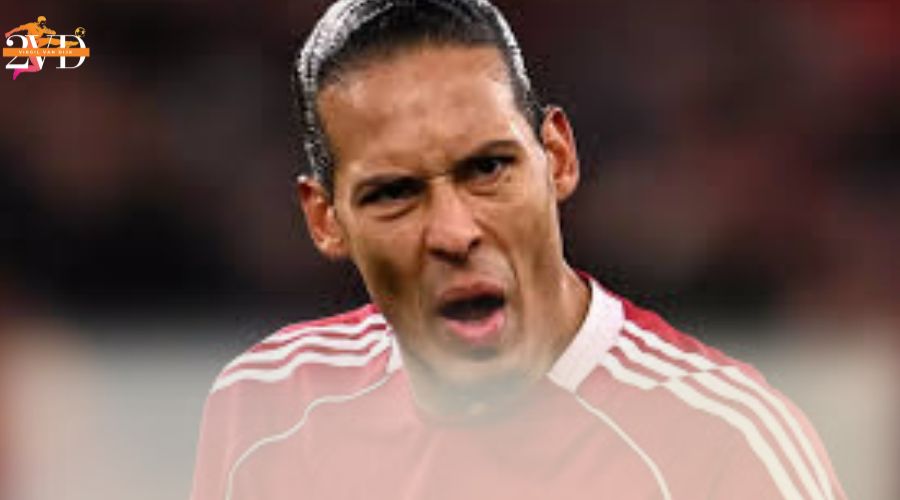
Contextually, this statement serves two functions. First, it validates the fan experience. When performance dips, supporters see it. If the captain ignores it, a disconnect forms. By acknowledging the reality, Van Dijk aligns the dressing room with the external reality. Second, it removes the safety net for his teammates. In a data-driven era where “Expected Goals” (xG) and possession stats can be used to mask poor performances, Van Dijk cuts through the noise to focus on the only metric that matters: the standard of play required to win.
This is not a “hairdryer treatment” typical of the 1990s. It is the modern, stoic realization that talent without application is insufficient. The Virgil van Dijk leadership impact is defined here by the refusal to accept “good enough” when the objective requires “exceptional.”
Tactical Role: Organizing Chaos Under Pressure
While the quote addresses mentality, it is inextricably linked to Van Dijk’s tactical function. Leadership in a center-back is not merely vocal; it is structural.
The Anchor of the High Line
Liverpool’s system, historically reliant on compressing space, requires the center-back to be the primary decision-maker regarding the height of the defensive line. When the team “plays poorly,” it often manifests as a disconnection between the midfield press and the defensive cover.
- Spatial Control: Van Dijk’s role is to physically push the unit forward. When he speaks of “playing like we did,” he is often referencing a lack of compactness.
- Recovery vs. Prevention: A drop in collective intensity forces defenders into “rescue mode”-making last-ditch tackles rather than preventive interceptions. Van Dijk’s frustration usually stems from a breakdown in the system that forces the game to become transitional rather than controlled.
Decision-Making in Possession
The captain’s influence extends to the build-up. In difficult phases, players often hide from the ball or play safe, lateral passes. Van Dijk’s tactical leadership involves forcing verticality. By stepping into midfield or hitting diagonal switches, he dictates the tempo. His comments suggest a demand for bravery in possession, implying that playing “safe” is actually the most dangerous option during a Top 4 chase.
Mentality and the Psychology of Standards
The difference between a squad that crumbles and one that rallies often lies in the “psychological floor” set by its senior leaders. This is the core of the Virgil van Dijk leadership impact.
The “Thermostat” Leader
In organizational psychology, leaders are often described as either thermometers (reflecting the temperature of the room) or thermostats (setting it). Van Dijk functions as a thermostat. When the team is too high (complacent), he grounds them. When they are too low (anxious), he stabilizes them. The statement “it will be DIFFICULT” is a thermostat adjustment. It cools down any premature optimism and heats up the urgency. It frames the Top 4 not as a prize to be awarded, but as a grueling task to be earned.
Absorption of Pressure
By speaking publicly and candidly, Van Dijk acts as a lightning rod. He absorbs the media narrative, shifting the focus from vulnerable younger players to himself and the collective standard. In the modern game, where social media scrutiny is relentless, protecting the mental state of developing talents (like a young partner in defense) is a crucial, unseen aspect of the captaincy.
Short-Term Impact: The Top 4 Calculus
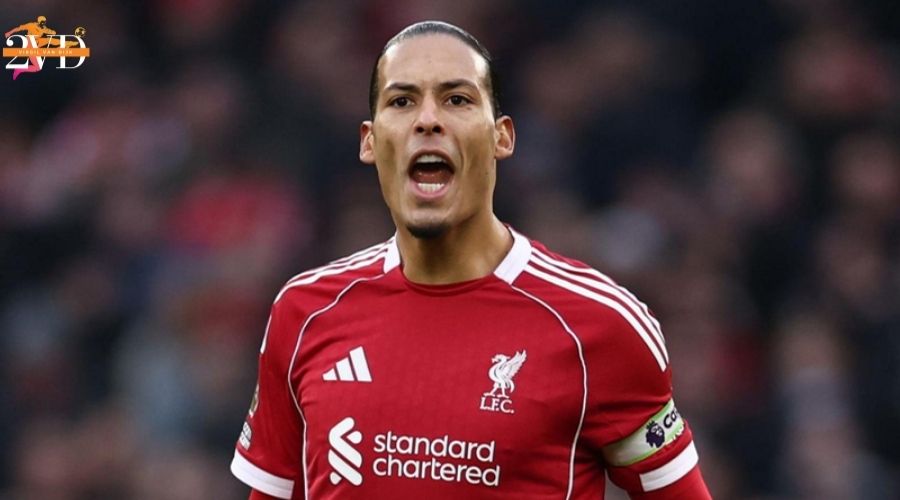
How does this mentality translate to the immediate objective? The “Top 4 race” is a test of consistency, not peak performance.
- Grinding Results: History shows that teams securing Champions League football often do so by winning “ugly” in the final stretch. Van Dijk’s warning is likely a pre-emptive strike against complacency in fixtures against lower-tier opposition.
- Defensive Solidity as a Baseline: In short-term tournament scenarios (which a Top 4 run-in essentially is), clean sheets are the most valuable currency. By questioning the level of play, Van Dijk is re-emphasizing the defensive foundation. If the attack falters, the defense must ensure the team does not lose.
The impact of his words will be measured in the next 270 minutes of football. Does the team start faster? Is the pressing structure more cohesive? These are the tangible metrics of a captain’s influence.
Long-Term Implications for Club Strategy
Looking beyond the current season, Van Dijk’s posture offers insight into Liverpool’s long-term squad planning.
The Succession Plan
The Virgil van Dijk leadership impact is also about mentorship. Who listens when he speaks? The reaction of the younger cohort-players like Jarell Quansah or Ibrahima Konaté-to these public challenges defines their suitability for the future. Van Dijk is effectively auditioning his successors. The club’s recruitment strategy relies on identifying players who can handle this level of internal accountability.
Sustaining a Winning Culture
Clubs often suffer a “hangover” after a legendary manager departs or a golden generation ages. The bridge between eras is built by players who uphold the culture when the external environment changes. Van Dijk’s insistence on high standards ensures that the club’s ethos survives turnover in personnel. He protects the “institutional memory” of what it takes to win major honors.
What This Tells Us About Modern Football (2026 Perspective)
This situation highlights a broader trend in the evolution of the elite footballer.
- The Cerebral Athlete: The physical attributes (pace, power) are now prerequisites. The differentiator in 2026 is cognitive and emotional intelligence. Clubs recruit “captains” in every position-players capable of self-diagnosis and correction in real-time.
- Transparency as a Tool: We are seeing a shift away from PR-managed robots. Fans and data analysts alike appreciate transparency. When a player’s verbal analysis matches the eye test and the data, it builds trust.
- Entity-Based Influence: In SEO and football analysis terms, Van Dijk is an “entity” that represents “Stability.” His actions are interpreted through this lens. Modern football analysis no longer separates the quote from the player’s tactical value; they are fused. A quote about difficulty is a tactical instruction to tighten up.
Conclusion: Reading Beyond the Result
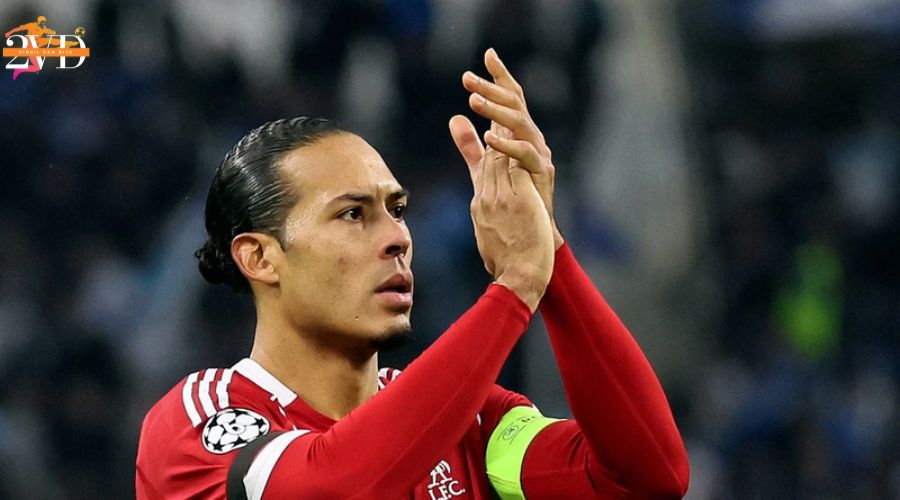
Analyzing the Virgil van Dijk leadership impact reveals that his comments regarding the Top 4 race are not merely reactive frustrations. They are proactive calibrations of a high-performance machine. In a landscape where the margins between the Champions League and the Europa League are defined by singular moments of concentration, the captain’s role is to ensure those moments are not left to chance.
Van Dijk demonstrates that in modern football, the physical battle on the pitch is governed by the psychological standards set in the dressing room. His warning is a reminder that talent dictates the ceiling, but mentality dictates the floor.
At the highest level, moments expose structure.